Powered By Blogger

Sabtu, 26 Februari 2011

Ambon : The Original Spice Islands


The tiny islands of Ambon, Banda, Ternate and Tidore - among the thousands of islands in the Moluccas seas,- changed the course of world history from the 15th century onwards. These islands were what triggered the European Age of Exploration.

For in search of the Spice Islands in the Far East, Christopher Columbus sailed west – and discovered America. Vasco da Gama sailed south and discovered the long route around Africa’s Cape of Good Hope in 1498 to finally reach India after a long and perilous voyage. Only later did the Portuguese finally discover the sea route to Banda and Ambon. These small islands in the eastern deep seas of the Indonesian archipelago were for centuries the sole producers of the fragrant nutmeg and mace in the world. At the time these spices fetched their weight in gold in Medieval Europe.

The tiny islands of Ternate and Tidore, further north of Ambon were producers of cloves. Indian and Arab traders would sell cloves in Europe for exorbitant prices, but kept the location of their source a tightly held secret. These are the Moluccas – or Maluku – the original Spice Islands, that are now divided into the two provinces of Maluku and North Maluku.

It is from these islands that the Dutch East India Company first gained their stranglehold on the spice trade in the archipelago, gradually colonizing the Indonesian islands over three centuries, until it came to be called the Dutch East Indies, the present-day Republic of Indonesia.

As the glory days spices passed, the significance of the Moluccas waned. But it is here where the history of European explorations and colonization began.

Fortunately the beauty of that era still remains. Today, the town of Ambon is the capital of Maluku, occupying a small flat area by the beautiful Ambon Bay that is backed by lush green mountains and facing deep crystal clear waters that are alive with colorful coral gardens and untold species of marine creatures.

Although small in size, Ambon island still offers plenty of experiences for adventurous travelers. From exploring the charming Kota Ambon – the main town of the island, to walking up mountains through lush tropical vegetation, there are many undiscovered gems ready for visitors to experience.

The town of Ambon – Kota Ambon – is known as ‘Ambon Manise’ meaning sweet or beautiful Ambon. The name refers to both the beauty of the people here and the beauty of the tropical island location.

As one of the earliest places in Indonesia to be occupied by colonial powers, Ambon has a rich and ancient history. Many of the Ambonese today have mixed European and Ambonese heritage.

Visit here and discover centuries-old fortresses and the literature of local kingdoms which traces the story of the people, from periods of prosperity to escalating and controlled trades, harsh colonialism, a grueling struggle, and finally, to independence.

The island also played an important role in World War II when Ambon was used as a headquarters for the Japanese military. Remnants from the war still remain, both in museums and the open air. Some war artifacts remain silently underwater. Today, these remnants are among the most valued historical sites in Ambon.

Ambon is multicultural and home to various ethnicities including the native Alifuru tribes, the migrating Javanese, Sumatrans, Minahasans, the Butons, the Arabs who came in the 9th century, the Europeans, and the Chinese who first came in the 7th century to share in the commerce of this prosperous spice island. Between 1999-2002 the island was the scene of Christian-Muslim violence however since 2004 the island has maintained a period of ongoing peace.

Jumat, 25 Februari 2011

Makassar : Historic Port for Spices and Sailing Ships


Formerly called Ujung Pandang, the city of Makassar is the largest city in east Indonesia. Capital of South Sulawesi, Makassar enjoys a central location in the Indonesian archipelago and today Makassar is Indonesia’s busy air hub, connecting Sumatra, Java, Bali and Kalimantan in the west with Sulawesi, the Moluccas and Papua in the east.

In fact, ever since the 14th. century Makassar was already known as a thriving sea port where merchant vessels from far away China, India and Cambodia called regularly to trade in silks, tea and porcelain in exchange for cloves, nutmeg and pearls from the Moluccas and gold and forest products from Makassar and its hinterland. And when in the 16th century the Europeans discovered the sailing route to the coveted Spice Islands, the Spanish and Portuguese made Makassar their important entrepot to store valuable spices before shipment to Europe.

Meanwhile, in this southern peninsula of Sulawesi, the Bugis, Makassar and Mandar ethnic groups, known for their seafaring prowess and boat building skills, had already developed powerful kingdoms that encouraged trade, fishery, rice cultivation as well as literature and the arts. The Bugis epic poem I la Galigo is a recognized masterpiece in Bugis literature, as are the graceful dances and bright silk costumes of court dancers with their richly decorated accessories of wide gold bangles, opulent necklaces and tiaras.

In 1667 however, through the Treaty of Bungaya, Dutch merchants succeeded to oust the Portuguese and Spanish from Makasssar to make this port their stronghold, banning other Europeans from trading in Makassar. The Dutch destroyed the fort of Ujung Pandang built by the king of Gowa in 1545, and fortified this into Fort Rotterdam, which today still stands prominently on the waterfront of Makassar, while the king of Gowa was allowed to stay at Fort Somba Opny Makassar aristocrats who refused to be dominated by the Dutch, left the city and settled in Kalimantan , the Riau Islands and present-day Malaysia. The sultans of Selangor and Johore are Bugis descendents as are the sultans of Kutai Kartanegara in east Kalimantan.

Located on the busy trading route along the deep Straits of Makassar, the city of Makassar is a bustling cosmopolitan town with settlement of many races and ethnic groups, of Chinese, Europeans, Javanese, Balinese, Ambon and others, where local and international cargo ships continue to call at its busy port. While at its traditional port of Paotere, Bugis pinisi schooners can be seen lining the quay to unload goods from near and far away islands, and various types of fishing prahus, such as the pantorani, the lepa-lepa and the sandeq unload the day’s catch.

Today Makassar is also a university town, where youth from all over the islands, especially from the eastern archipelagos gather to gain higher education.

And, to provide entertainment for its population and to attract tourists especially from east Indonesia, Makassar now boasts a large theme park called Trans Studio, touted as the third largest indoor theme park in the world. For details see: www.transstudioworld.com
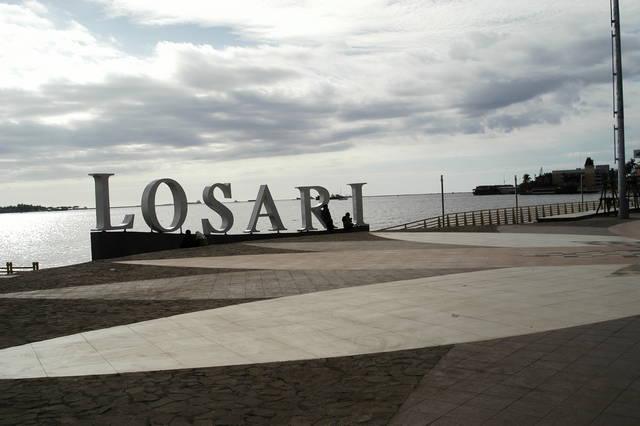
Makassar’s Sultan Hassanuddin airport is today Indonesia’s most modern airport. Makassar has a wonderful esplanade called the Losari Beach, the only place in Indonesia where one can see both a beautiful sunrise as well as a spectacular sunset. The Losari Beach is lined with luxury hotels and in the evenings comes alive with food stalls.

Makassar is the Gateway to East Indonesia, as well as the entry point to an adventurous tour to the Tana Toraja highlands, where awesome mountain scenery and the unique rituals of the Toraja people await.

Makassar's Circle of Tourism Writers, LPP, the travel industry and travel lovers of Makassar have created a new web in conjunction with the Visit Makassar Year 2011 to provide up to date information on this destination. The web is bilingual, in English and Bahasa Indonesia. To open click: www.mymakassar.com.

Kutai National Park


Kutai National Park (KNP) is a lowland tropical forest in East Kalimantan. KNP has an area width of 198,629 hectares. Its bio-diversity and vegetation makes it a great destination for local as well as foreign nature lovers and researchers. Iron-meranti-kapur (Dryobalanops Spp.) woods, mixed dipterocarpaceae, mangroves and kerangsa are types of vegetationAt present, about 900 types of vegetations in the park have been identified. For local students in its surrounding areas e.g., Bontang and Sangatta, KNP is a facility to learn about the nature. Two locations of KNP frequently visited by tourists are Sangkima and Prevab resorts. Visitors are charged with an entry fee of Rp1,500 for local visitors or Rp15,000 for foreign visitors.
s found in KNP.

Sangalaki EAST KALIMANTAN , Underwater Paradise


For those of you who like diving, the beauty and diversity of flora and fauna around Sangalaki Island will attract you to come again and again. This island is located in the Derawan Archipelago, Berau, East Kalimantan. It is one of the best locations for diving and snorkeling in the world, along with Raja Ampat in Papua province.

Blowing winds, clean seawater, soft sands, warm sun, beautiful waves, coconut trees, and beautiful afternoons complete the excitement of your diving.

Sangalaki‘s underwater scenery facinates everyone who sees it. Manta Alfredi (Pari Hantu), which only exists in Derawan, Barracudas, Stingrays, giant squids, and starfish are only part of the underwater paradise of Sangalaki.

Since Manta Alfredi is a very rare animal, many tourists come to Sangalaki to see this very unique animal. This tropical animal looks like a stingray, but both its whiskers work as wings.
Popular diving points in this area include Channel Entrance, Coral Gardens, Town, Sandy Ridge, Manta Run, Sherwood Forest, Manta Parade, Manta Avenue, Ridge, Lighthouse, and The Rockies among others. Sangalaki is also known as an island where turtles lay eggs. You could see this unique process during breeding season close-up

Unlike other diving locations, the management of Sangalaki Island strictly maintains the natural conservation of this island. It is situated between East Kalimantan and Sulawesi. As an example, at night when you don't need any urgent electricity, the management will shut down the electricity on this island. Thus, this island is very quiet and is a favorite place for those of you who like to stay away from busy and noisy cities.

To reach Sangalaki Island, you may take an airplane from Soekarno-Hatta airport in Jakarta to Sepinggan airport (BPN) in Balikpapan. Among airlines flying to Balikpapan are Garuda Indonesia, Airasia, and Lion Air.

From Sepinggan, you may take a Deraya airplane to the capital city of Berau district, Tanjung Redeb. Deraya serves commuter and chartered flights. During this journey, you may see the life of the local community in the Kalimantan hinterlands which are not influenced by modernization.

Upon your arrival in Tanjung Redeb, you have another journey by speed boat along the Segah River to Sangalaki. Seeing the local community living by the river side and happy children playing will bring a smile to you after a long journey. In total, it takes about 8 to 9 hours from Jakarta to Sangalaki. In addition to visiting Sangalaki, you could also visit equally interesting neighbouring islands such as Maratua, Derawan, and Kakaban islands.

Palembang on the Musi River : Heart of ancient Srivijaya

Palembang, the second largest town on Sumatra after Medan, was once the celebrated seat of the rich and powerful Srivijaya kingdom, that for more than three centuries - from the 9th to the 11th century - reigned supreme over the Sumatra seas up to and including the strategic Straits of Malacca. Srivijaya was then known as the wealthy trade hub as well as the center for Buddhist learnings. Monks from China, India and Java used to congregate here to learn and teach the words of Buddha. In AD 671 Chinese chronicles wrote that the famous Chinese Buddhist monk, I Ching sojourned in Palembang for six months on his way to India. I Ching wrote that there were more than 1,000 Buddhist monks in the city and advised Chinese monks to study Sanskrit in Palembang before proceeding to India. While the Srivijaya kings lived inland on shore, his subjects lived along the wide Musi river, manning the powerful fleet and busily trading in gold, spices, silks, ivories and ceramics with foreign merchants who sailed in from China, India and Java. In 1025, however, the king of Chola in South India sent a fleet to Sumatra, destroying the kingdom, marking the end of its golden era. Later, Chinese admiral Cheng Ho, emissary of the Chinese emperor visited Palembang in the 15th century.
Palembang is also known in history as the origin of the Malays whose kings are believed to have descended to earth at Gunung Siguntang, north of Palembang.

Today, not much can be seen from Srivijaya’s golden age, except for evidence of the area’s fine gold and silver songket weaving that persists until today, the fine lacquerware it produces for which Palembang is renowned, and its regal dances and opulent costumes.

Capital of the Province of South Sumatra, Palembang today thrives from coal, mined in its surroundings and from palm oil plantations. Much of the inhabitants still dwell for kilometers along the wide Musi river.
The Musi river has its source deep in the Bukit Barisan mountains, tumbling down to reach the plains where, fed by the converging Ogam and Komering rivers, it then widens into a large river as it reaches Palembang. Its many tributaries and streams that cut through Palembang, has caused this town at times to be called ‘The Venice of the East’.

The Icon of modern Palembang is the Ampera Bridge, which was opened to the public in 1965, spanning this wide river connecting both sides of the city. The view from the Musi river from this vantage point is stunning. Watch the bustling boats at the floating market by the Ampera Bridge, while at sunset the view with the many houses on stilts along both sides of the Musi and the centuries’ old quaint Chinese shop-houses, are memories to be captured on film and not easily forgotten.

North of the Ampera bridge, is the Mesjid Agung or Royal Mosque, built in 1740 by Sultan Badaruddin I, and recently restored to its former glory. This area was once the capital of a Malay Islamic kingdom which came to an end in 1825, when the last Sultan, Ahmad Najamuddin surrendered to the Dutch and was banished to Banda Neira.

But Palembang is not only about history. On New Year’s Eve, tens of disc jockeys gather downtown to deliver brand new energy, while the traditional songket weavers and wood carvers shy away from the loud trendy exposure.

When in Palembang donot forget to try the spicy steamed river fish wrapped in banana leaves, called pindang, or Palembang’s specialty, the favourite dish called pempekdipped in aromatic sweet vinegar sauce.

The Kraton YOGYAKARTA : Palace Fit For A Javanese King


The palace of Yogyakarta, known as the Keraton (also spelled kraton or karaton), is a grand complex that was meticulously planned to reflect the Javanese cosmos. This splendid example of traditional Javanese architecture has no equal. Designed and built in stages, the Keraton was completed in 1790.

This elegant complex of pavilions was constructed entirely on ancient beliefs and each feature of the complex, from the courtyards to the trees, has a special symbolic meaning related to sophisticated Javanese philosophy.

The Keraton is built facing directly north towards the majestic Mt. Merapi with to its south backing the Indian Ocean which is believed to be the abode of Nyi Loro Kidul, the Queen of the South Seas and the mystical consort of the Sultan. Malioboro road was originally used as the ceremonial route, not unlike London’s Pall Mall, and forms a straight line drawn from the Sultan’s palace to the Merapi volcano.

A green square called alun-alun fronting the palace, has a large banyan tree in its center, while behind the palace is another similar square. When a sultan dies, the cortege leaves by the southern gate on its way to the cemetery of kings at Imogiri.

This palace was designed to be more than just a royal residence. It was built to be a focal point of the Sultan’s entire kingdom. Today, the Keraton is a piece of living history and tradition. It continues to be used, both as a home of the Sultan as well as for other important ceremonial and cultural functions of the Yogya court.

The present Sultan Hamengku Buwono X of Yogyakarta retains the title of Sultan although Yogya has become one of the provinces of the Republic of Indonesia. The Sultan of Yogya,is also the governor of the province, and is still considered the cultural head of this region, and is greatly loved by his subjects.

Even with Yogya’s modernization, the Keraton of Yogya continues to be respected by the people of Yogya, steeped as it is in mysticism and philosophy. In the afternoons, after the palace is closed to visitors, women in traditional costume can be seen respectfully sprinkling water and flowers on the pillars, lighting incense to “cleanse” the keraton from evil spirits.

Minggu, 20 Februari 2011

Plengkung Beach / G-Land BANYUWANGI , EAST JAVA


Plengkung is known as one of the best surfing beaches in the world. The word of “G” in “G-Land” derives from Grajagan, the name of the bay where the huge waves were found at the south of the Banyuwangi. It is surrounded by virgin tropical land forest. G lad offers the worlds most demanding surfing sport, and recommended for professional surfers only. May to October is the best time for surfing. No doubt it is a world of surfer paradise. Most surfers start from Bali, take an overland to Banyuwangi and directly to National Park of Alas Purwo, G-Land or cross the Grajagan Bay to Plengkung beach where the waves challenge invite the surfers. However it is not recommended for novices

Accomodation
There are some simple cottages and a jungle camp available by the beach.
Recreational facilities
Plengkung is located on the south coast of Banyuwngi the eastest of Fast Java. The visitor can visit Plengkung overland. To reach Plengkung can be taken in two ways:

* Overland. Banyuwangi-Kalipahit (59km)by bus Kalipahit Pasaranyar (3km) by ojek or rent a car, Pasaranyar-Trianggulasi (12km), Trianggulasi-Pancur-Plengkung/G-Land.
* Overland-sea : Banyuwangi-Benculuk (35km) by bus, Benculuk Grajagan (18km) by bus or public transportation, Grajagan-Plengkung by speedboat,
Both ways toPlengkung are OK, if the visitors choose the second way, they can spend the night at Grajagan and enjoy the view before continue the journey to Plengkung.